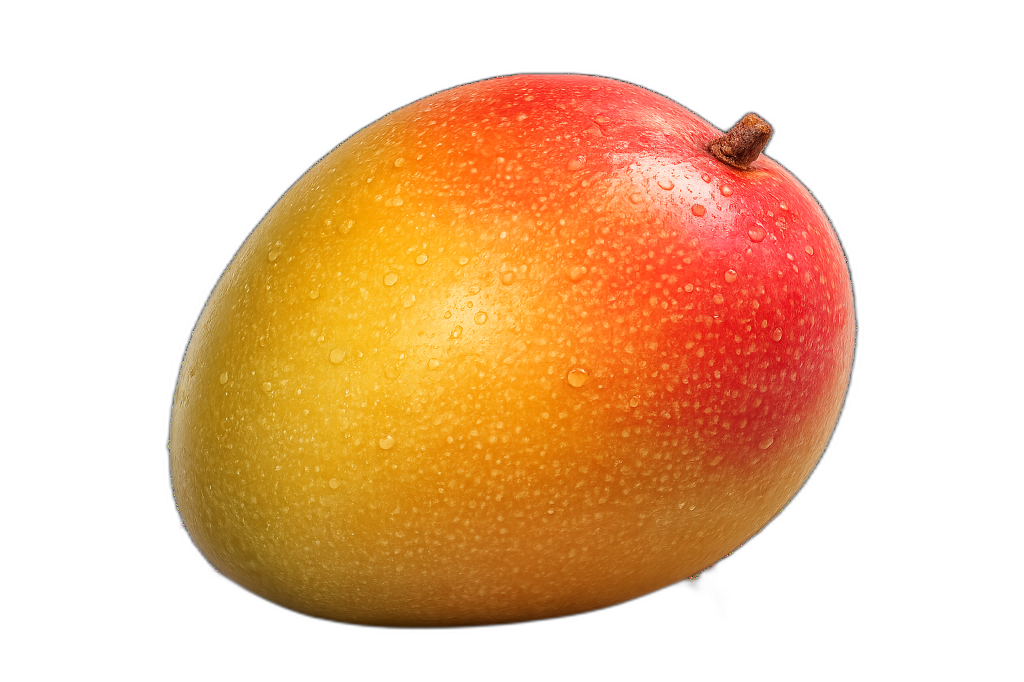
The Sindoora is the variety that opens the Karnataka mango calendar. By the time the headlines start talking about Alphonso, Sindoora has already been on Bengaluru tables for three weeks — and by the time most people remember to order it, the season is over.
It is the first hello of the summer. Small, blush-red, and unmistakable.
A short biography
Sindoora is named after sindoor, the vermillion red of its ripe shoulders — a colour no other Karnataka mango variety carries. It grows almost exclusively in the Kolar–Chikkaballapur–Tumkur triangle, on the same red laterite soils that make the rest of the Old Mysore mango belt famous. Trees flower very early — late December to mid-January — and the first ripe fruit lands in mandis by the second week of March, three to four weeks ahead of every other Karnataka variety.
A typical Sindoora weighs 150 to 220 grams — noticeably smaller than Raspuri or Badami. The skin starts yellow-green and develops a vivid red blush across the sun-side shoulder as it ripens. Inside, the flesh is firmer than Raspuri, with a bright, almost zingy quality that sets it apart from the heavier mid-season varieties.
What it tastes like
Sindoora is a fresh mango. Where Raspuri tastes like honey and Alphonso tastes like saffron, Sindoora tastes like a hot March afternoon — bright, juicy, with a faint tartness that keeps it from cloying. Eaters who find the mid-season varieties too heavy or too sweet often find their match in Sindoora.
Three contexts where it shines:
- Eaten cold from the fridge on a 38°C day. The slight tartness is exactly what the body wants.
- Sliced into a salad with raw onion, green chilli and lime. Sindoora's firmer texture holds up.
- Made into a quick green-mango chutney while still half-ripe. The transitional fruit is excellent for South Indian maavinakaayi chitranna.
The Sindoora is the only Karnataka mango that tastes better cold than warm.
Why most people miss the Sindoora season
Three reasons:
- It is too early. Most households start mango shopping in mid-April, by which time the Sindoora window is two-thirds over.
- It is small. A box of Sindoora has 25–30 fruit instead of the 12–15 of a Badami box. Buyers used to "big" mangoes feel short-changed until they taste it.
- The volume is small. Karnataka grows roughly one-tenth as much Sindoora as Badami. Distributors do not push it because the supply does not justify the marketing.
If you want Sindoora in 2026, the order needs to go in by the end of March. By the second week of April, the variety has already started giving way to Banganapalli and Raspuri.