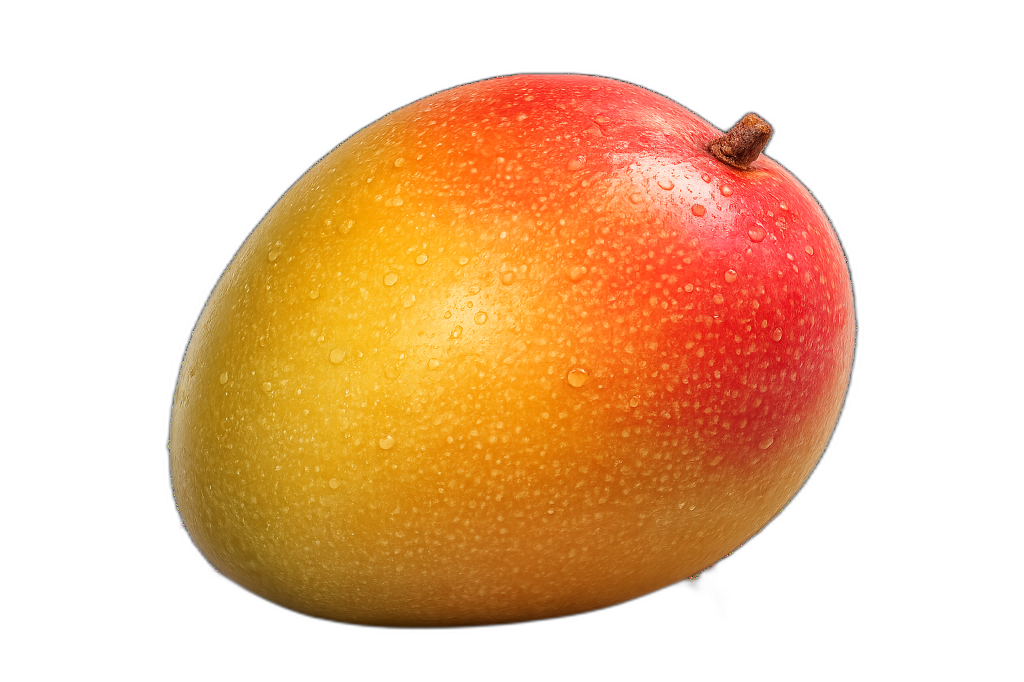
The Banganapalli — Benishan in the Telugu-speaking South, Safeda in the North — is the most-eaten mango in South India. It is also the most-misnamed. Half the "Alphonso" sold in North Indian supermarkets is actually Banganapalli; half the "Karnataka special" boxes shipped to Mumbai are too. The fruit has done more for the Indian mango economy than any other variety, and it has done it without ever owning a brand.
This is the workhorse mango. Big, yellow, dependable.
A short biography
The variety originates from Banganapalli town in Kurnool district of Andhra Pradesh, where it has been cultivated since the early 1800s. Today the production zone has spread across the Andhra–Karnataka border into Kolar, Chittoor and Anantapur — a contiguous mango belt that produces the largest single volume of any Indian variety. Karnataka and Andhra together grow roughly 2 million tonnes of Banganapalli a year. By comparison, Konkan Alphonso is around 200,000 tonnes.
A typical Banganapalli weighs 350 to 450 grams — the heaviest of the popular varieties. The skin is smooth, golden-yellow when ripe, with no red blush. The flesh is firm, dense, and almost completely fibreless. It slices cleanly with a knife and holds its shape on a plate — qualities that make it the default mango for fruit platters, dessert garnishes, and breakfast bowls.
What it tastes like
Banganapalli is the most neutral of the popular mangoes. Where Alphonso is intense and Raspuri is honeyed, Banganapalli is clean — sweet without being heavy, with a faint melon-like background note and almost no tartness. Eaters who find Alphonso "too much" almost always end up loving Banganapalli.
This neutrality is its superpower. Banganapalli works in contexts where stronger varieties would dominate:
- Mango sticky rice — the Thai dessert demands a firm, mild mango. Banganapalli is the closest Indian match to the Nam Dok Mai it traditionally uses.
- Mango milkshake — its mildness lets the milk and cardamom come through.
- Fruit bowls and platters — slices stay sharp and don't bleed colour into other fruit.
- Mango cheesecake — a classic Indian-restaurant dessert that depends on Banganapalli's clean sweetness.
If Raspuri is the mango you spoon, Banganapalli is the mango you slice.
How it ripens
Banganapalli is the most forgiving mango on this list. A box arrives firm and slightly green-shouldered. Lay the fruit out at room temperature in a single layer. Within four to seven days the skin turns evenly golden and the stem-end softens. There is no carbide-vs-natural anxiety with Banganapalli that you get with Alphonso — the natural ripening curve is gentle and visible.
Once ripe, a Banganapalli holds for eight to ten days at room temperature, longer than any other variety in this atlas. It is the right mango to buy if you are a household of two who can't eat through a 5kg box in a week.
Banganapalli vs. the rest
| Use case | Best variety |
|---|---|
| Eating fresh, simple | Banganapalli or Raspuri |
| Aamras / juice | Raspuri |
| Slicing for a plate | Banganapalli |
| Gifting | Alphonso |
| Mango lassi | Raspuri or Badami |
| Mango sticky rice | Banganapalli |
| Mango shrikhand | Badami |
| Long shelf life | Banganapalli |
| Lowest fibre | Alphonso, then Banganapalli |
| Best price-to-quality | Banganapalli |
For most Bengaluru households, the right answer most weeks is Banganapalli — and on the weekend you want to splurge, a small box of Alphonso. That is the practical mango calendar.