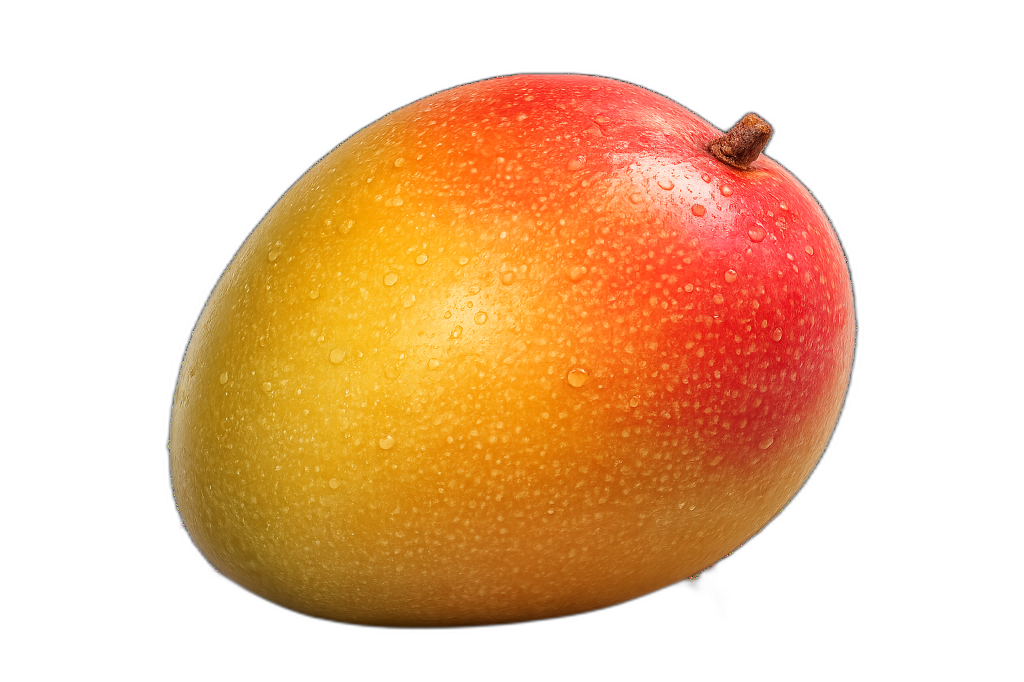
If Karnataka had a household mango — the one your grandmother's hand reaches for first — it would be the Raspuri. Locals call it the Queen of Karnataka mangoes, and the title is earned at the dinner table, not in marketing decks. Pierce the skin with a thumb and the fruit gives way like custard. Squeeze gently and it surrenders its pulp in a single warm pour.
This is not a slicing mango. It is a drinking mango.
A short biography
The Raspuri's roots run through the Old Mysore belt — Kolar, Srinivaspur, Kanakapura, Ramanagara — districts where the red laterite soil and a sharp diurnal swing between hot afternoons and cool nights produce the variety's signature low-fibre, high-sugar pulp. Trees flower in late January and the first ripe fruit lands in mandis by mid-April. May is its peak; by the third week of June it has ceded the orchards to Badami and Mallika.
You will find Raspuri sold by weight, almost never by the piece. A typical fruit is oval, fits in one cupped hand, and weighs between 200 and 300 grams. The skin starts mottled green and ripens to a sun-warmed yellow with the occasional red shoulder.
Why Karnataka households buy it by the box
The case for Raspuri is simple, and it is made every summer in three steps:
- It is the aamras mango. The Maharashtrian Alphonso may dominate the concept of aamras, but in practice — across Karnataka and large stretches of Andhra and Tamil Nadu — Raspuri is what gets pressed through a sieve into a steel bowl with a pinch of cardamom. The pulp is so loose it barely needs a blender.
- It does not punish you for waiting. Alphonso has a notoriously narrow window between under-ripe and over-ripe; Raspuri is forgiving. A box keeps for six to eight days at room temperature, ripening evenly without turning to ferment.
- It is a Karnataka mango, grown by Karnataka farmers, sold at Karnataka prices. Ratnagiri Hapus boxes shipped to Bengaluru carry a two-state markup. Raspuri does not.
The Raspuri does not need a knife. It needs a steel plate, a glass of water, and the discipline to stop at three.
How to ripen Raspuri at home
A Raspuri box arrives firm and slightly green. Do not refrigerate it. Lay the fruit out single-layer in a basket lined with newspaper, somewhere warm and dark — a kitchen cupboard works. Within three to five days the skin will deepen to an even yellow and the stem-end will give off a heady, almost honey-like aroma. That is the moment to eat it. Once ripe, you have a 48-hour window before the pulp starts to liquefy from the inside.
Refrigerate only after fully ripe, and only if you are not eating it within a day.
Raspuri vs. Alphonso vs. Badami
Three questions get asked every season. Here is the short version:
| Trait | Raspuri | Alphonso | Badami |
|---|---|---|---|
| Best use | Pulp, lassi, aamras | Slicing, eating fresh | Both — most versatile |
| Sweetness (1–10) | 9 | 9 | 8 |
| Fibre | None | Low | Low–medium |
| Skin colour ripe | Yellow with red blush | Saffron orange | Golden yellow |
| Karnataka availability | Abundant, local | Imported from Konkan | Abundant, local |
| Typical Bengaluru price (per kg) | ₹350–550 | ₹600–1200 | ₹400–700 |
For a juice-first household, Raspuri wins. For gifting, Alphonso. For an everyday box that does both, Badami — which we cover in the next plate of the atlas.
How to tell a real, residue-free Raspuri
Carbide-ripened Raspuri is the curse of every Bengaluru mandi season. Three signs to check before buying:
- Smell first, look second. A naturally ripe Raspuri carries its perfume from a foot away. Carbide-ripened fruit looks identical but smells of nothing — or worse, smells faintly chemical near the stem.
- Look for uneven ripening. Real fruit ripens unevenly — patches of green, yellow shoulders, red blush. Carbide-ripened fruit goes uniformly yellow overnight, often while the inside is still hard and starchy.
- Check the stem end. A naturally ripe mango has a slightly retracted, brown stem cavity. A carbide fruit has a fresh-cut, green stem because it was force-ripened after picking.
The Desi Grove ships only naturally tree-ripened Raspuri — picked the morning of dispatch, never gas-treated.