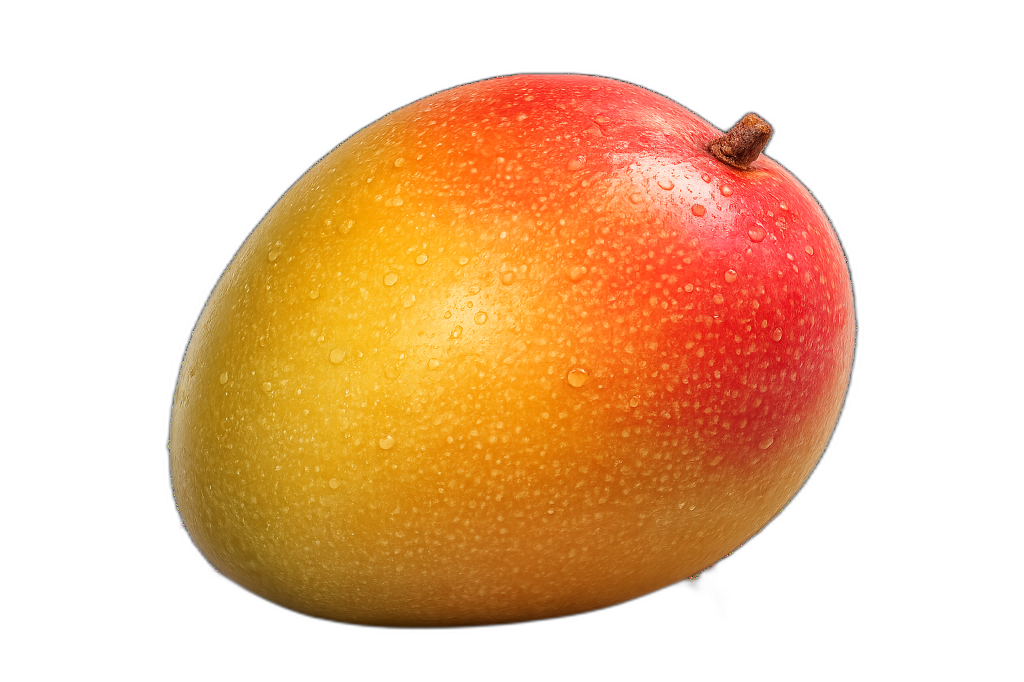
The Badami is the mango most Bengaluru households actually eat, even though they call it something else. "Send me a kilo of Karnataka Alphonso," the message reads, and what arrives is Badami. There is no deception in this — the Badami is, by lineage and flavour, a near-twin of the Ratnagiri Hapus, grown in the bordering districts of north Karnataka and southern Maharashtra.
The differences are smaller than the marketing makes them sound. The price gap, however, is not.
A short biography
The Badami's home turf is the black-soil belt that runs through Dharwad, Belgaum and Bagalkot — the same agro-climatic corridor that, just across the state line, produces the Devgad and Ratnagiri Hapus. Trees flower in early February and the first ripe fruit lands in mandis around the third week of April, with peak supply in the last week of May. Late-orchards hold on through the second week of July.
A typical Badami weighs 250 to 350 grams. The skin is thinner than Raspuri's and ripens to a clean golden yellow with no red blush. The flesh is denser, holds a slice cleanly, and carries the same resinous saffron aroma that defines the Hapus.
The honest comparison: Badami vs. Alphonso
Every Bengaluru mango eater eventually has this conversation. Here is the short version, without the marketing:
| Trait | Badami | Alphonso (Ratnagiri) |
|---|---|---|
| Origin | North Karnataka | Konkan coast (Maharashtra) |
| Size | 250–350g | 200–300g |
| Aroma | Saffron, resinous | Saffron, resinous (slightly more concentrated) |
| Sugar | 18–20° Brix | 19–22° Brix |
| Fibre | Low | Very low |
| Shelf life ripe | 4–6 days | 3–5 days |
| Bengaluru price (per kg, peak) | ₹400–700 | ₹800–1500 |
| Carbon miles to Bengaluru | ~450 km | ~900 km |
The Badami is cheaper because it travels half the distance. The flavour gap, side-by-side, is real but small — a Hapus carries marginally more concentrated aroma; a Badami is fuller in the mouth. In a blind taste at room temperature, most eaters cannot reliably tell them apart.
If you are gifting, Alphonso still has the brand cachet. If you are eating, Badami is the smarter buy almost every week.
Why this variety matters in 2026
The 2026 Konkan Alphonso harvest has been weak — unseasonal rain in February damaged a third of the early flowering, and farmgate prices are up 20–30% over last season. North Karnataka's Badami crop, by contrast, has had a clean weather window. Bengaluru households who switched to Badami this season are paying half the price for what is essentially the same mango. We expect this shift to outlast the season.
Why pay Maharashtra prices for a Maharashtra middleman, when the same mango grows two districts north of Hubli?
How to eat a Badami well
The Badami's firmer texture makes it the most versatile of the Karnataka varieties. Three uses where it outperforms Raspuri:
- Slicing for a fruit plate. Badami slices hold their shape; Raspuri collapses.
- Mango shrikhand. The denser pulp folds into hung curd without thinning it.
- Mango cheesecake / mousse. The firmer flesh blends to a silken purée without the separation Raspuri sometimes shows.
For aamras, Raspuri is still the king — it surrenders its juice without a fight. But for everything else on a summer table, Badami is the everyday workhorse of the Karnataka mango world.