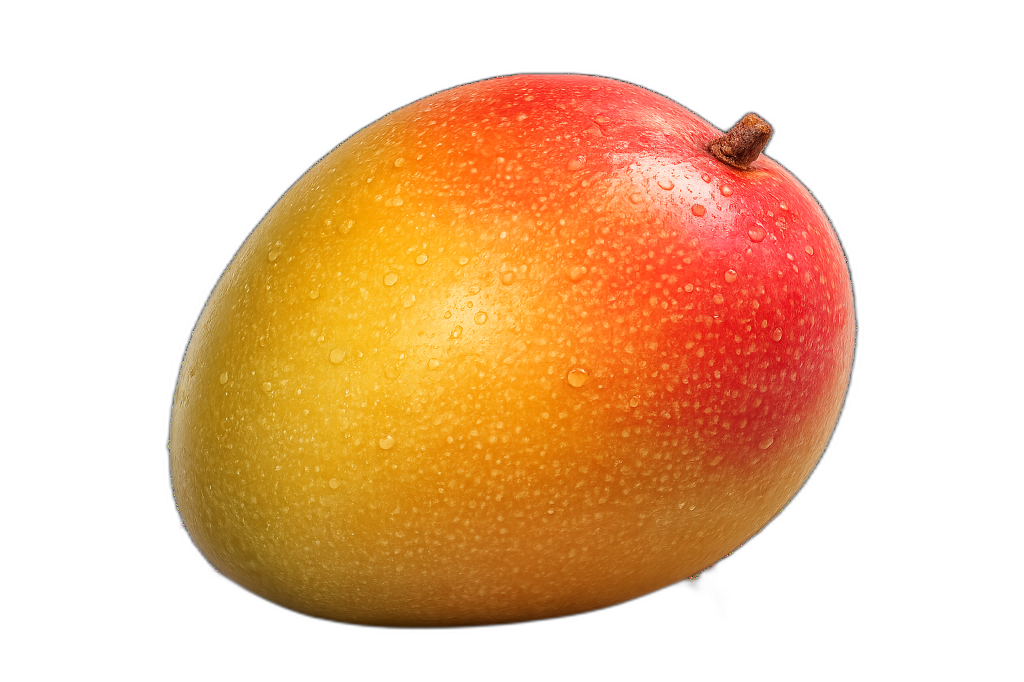
A box of mangoes arrives at your door, the fruit is firm and slightly green, and you have a problem: you want to eat them in three days, not two weeks. Most of the advice on the internet about ripening mangoes is wrong — either dangerous (microwave them, soak them in salt water) or pointless (bury them in raw rice, which adds nothing the kitchen counter cannot do). This is the actual method, distilled from generations of Indian household practice.
The whole guide is one paragraph long: paper bag, kitchen counter, dark cupboard, five days. The rest of this page is the why.
The science, briefly
Mangoes are climacteric fruit. They ripen after being picked, on a chemical signal from a gas they themselves produce: ethylene. The ripening process is autocatalytic — once it starts, more ethylene is released, which triggers more ripening, and so on.
Three things speed it up:
- Concentrating the ethylene. Trapping the gas around the fruit makes it ripen faster.
- Warmth. Mangoes ripen best at 20–25°C. Below 13°C the process stops entirely.
- Company. Other ethylene-producing fruit (especially bananas and apples) accelerate mango ripening dramatically.
Three things slow it down:
- Cold. Refrigeration halts ripening completely — sometimes permanently if the fruit was unripe when chilled.
- Bright light. UV breaks down some of the chemicals that develop during ripening.
- Air circulation. A mango in an open basket loses ethylene to the room and ripens slower than one in an enclosed space.
The method
-
Take the mangoes out of any plastic packaging. Plastic traps moisture, which causes rot before ripening.
-
Lay them out single-layer on newspaper in a wicker basket, cardboard box, or shallow tray. Do not stack — pressure points bruise the fruit.
-
Add one banana or apple to the basket. This is the single biggest accelerator. The ethylene from the banana will speed up the mango ripening by 1–2 days. Skip if you want the mangoes to ripen slowly.
-
Cover the basket loosely with a sheet of newspaper or a clean kitchen cloth. This traps the ethylene without suffocating the fruit. If you want even faster ripening, wrap the whole basket in a paper bag.
-
Place in a warm, dark cupboard. Inside a kitchen cabinet works. Below the kitchen sink works. The hot water tank cupboard, if you have one, works fastest. Avoid sunlight.
-
Check every 24 hours. Press the stem end gently with a thumb — not the side, the stem end. A ripe mango yields slightly. Smell the stem end — a ripe mango has a strong, sweet, fruit-perfume smell from a foot away.
-
Pull out the ripe ones as they ripen. Mangoes do not ripen evenly. Some will be ready in 3 days, some in 6. Move ripe ones to the kitchen counter or fridge to halt ripening. Leave the rest in the cupboard.
Common mistakes
- Refrigerating before ripening. This is the most damaging thing you can do to a mango. Cold permanently halts the ripening enzymes — the fruit will never develop full flavour or aroma. Always ripen at room temperature first.
- Stacking the fruit. Pressure points cause invisible bruises that turn into brown spots inside.
- Trying to ripen Alphonso the same way as Banganapalli. Different varieties have different ripening curves. Alphonso ripens fast and aggressively (3–4 days). Banganapalli is slower and more forgiving (5–7 days). Mallika is the slowest (7–9 days).
- Microwaving. Never. Microwaving denatures the enzymes; you get warm, mushy fruit that smells right but tastes like nothing.
- The "rice container" myth. Burying a mango in raw rice does the same thing as a paper bag, but with extra steps and rice that now smells of mango.
The cupboard works. The microwave does not. Trust the grandmother, not the hack.
How to know it is ripe
Three signs, in order of importance:
- Smell. A ripe mango carries its perfume from across the kitchen. You should not need to put your nose on the fruit.
- Stem-end give. Gently press the stem end with your thumb. A ripe mango yields slightly, like a peach.
- Colour. Less reliable than smell or touch — some varieties (Banganapalli, Mallika) stay yellow even when overripe; some (Sindoora) develop red shoulders even when underripe. Use colour as a confirmation, not a primary signal.
When to refrigerate
Once a mango is fully ripe, you have a 48–72 hour window before it starts to over-ripen. Move ripe mangoes to the fridge (vegetable drawer) and they will hold for another 3–5 days. Take them out 30 minutes before eating — cold mango has half the aroma of room-temperature mango.
Never refrigerate an unripe mango. Never.
A note for Bengaluru kitchens
Bengaluru's room temperature in April–June is almost perfect for mango ripening — 24–28°C, slightly humid. A box from us will typically ripen in 4–5 days on a kitchen counter without any acceleration tricks. If you want them faster, add the banana. If you want them slower, spread them out and skip the cover. The system is forgiving.
The only thing you cannot rush is the genuine flavour development — which is why we never gas-ripen our fruit before shipping. You get the time the variety needs, and the perfume that comes with it.